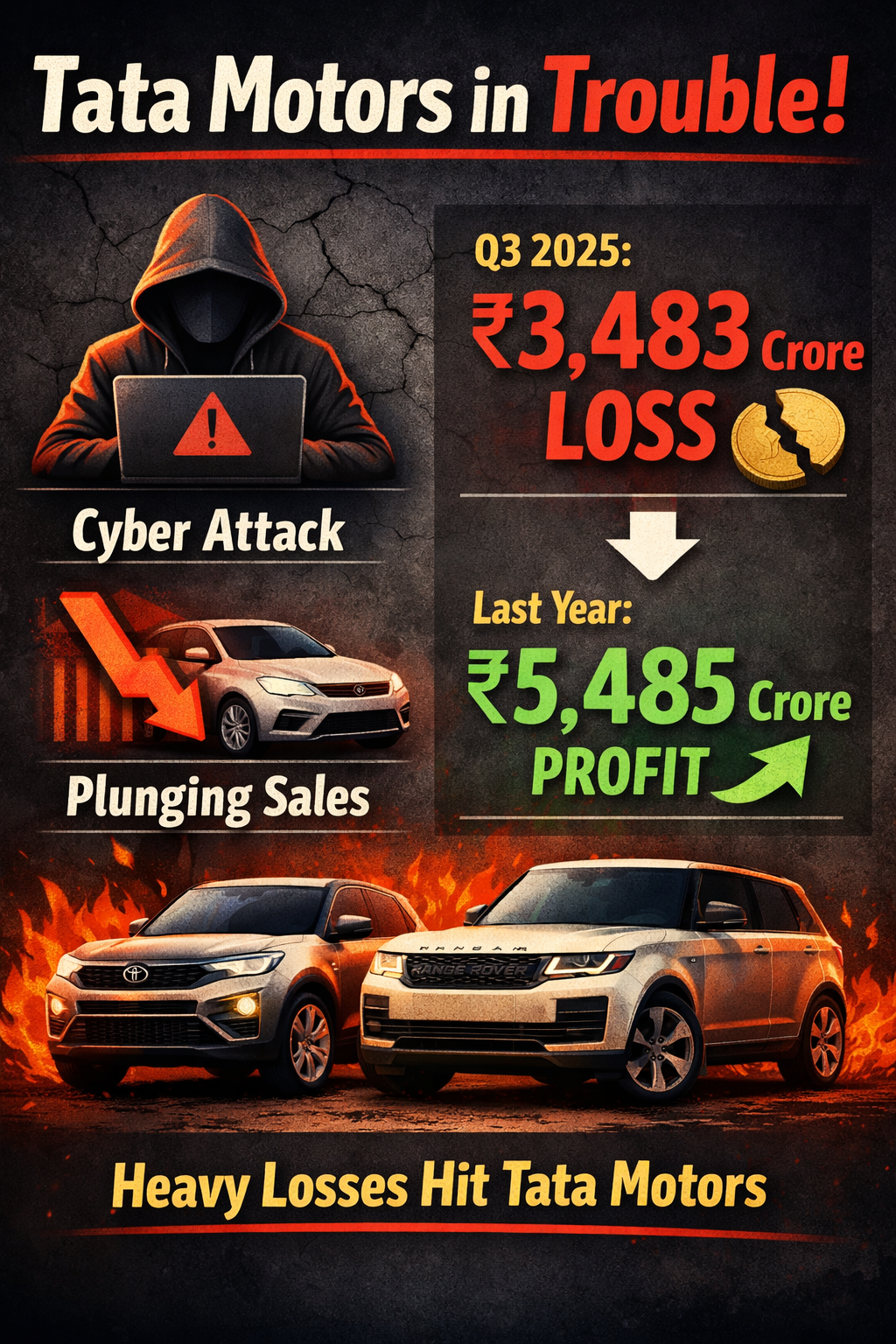
Tata Motors just wrapped up a rough three months, posting losses that have shocked investors and industry watchers alike. The company that makes everything from your neighbor's Nexon to luxury Range Rovers reported a staggering loss of ₹3,483 crore between October and December 2025.
To put that in perspective, just a year ago during the same period, they were celebrating profits of ₹5,485 crore. That's a massive swing in the wrong direction.
What Went Wrong?
The biggest villain in this story? A cyber attack that hit Jaguar Land Rover (JLR), Tata Motors' premium car division, back in late August. This wasn't just some minor technical glitch. The attack forced JLR to completely shut down production for weeks.
Think about it - one of the world's most famous luxury car brands couldn't make cars for months. Even when they finally got production rolling again in mid-November, they still had to figure out how to get all those delayed vehicles to customers around the world.
The financial damage was severe. JLR's revenue crashed by 39.4% to just £4.5 billion. For a company used to printing money with high-margin luxury SUVs, this was brutal. The cyber incident alone cost them ₹800 crore in direct expenses.
More Than Just Hackers
But the cyber attack wasn't the only problem. JLR is also dealing with some strategic headaches that made things worse.
They're winding down production of their older Jaguar models because they're preparing to launch brand new ones. While this makes sense for the future, it means fewer cars to sell right now. It's like renovating your restaurant - necessary, but painful while it's happening.
Then there's China. The Chinese luxury car market, which used to be a goldmine for companies like JLR, has gotten much tougher. Sales there have slumped as Chinese customers deal with economic uncertainty and increasingly prefer local brands.
And if that wasn't enough, the United States has been adding tariffs on imported cars. Since JLR exports vehicles to America, every car they sell there now costs more and makes less profit.
The Silver Lining
Here's where the story gets more interesting. While JLR was struggling, Tata Motors' domestic passenger vehicle business in India actually had a pretty good quarter.
They sold a record 171,000 cars wholesale and crossed 200,000 retail sales for the first time ever. How did they pull this off? Two things helped - the government reduced GST rates on cars (making them cheaper), and Indian buyers were in a festive mood during Diwali season.
Tata launched some exciting new models too. The retro-styled Sierra made a comeback, and they unveiled petrol versions of the popular Harrier and Safari SUVs. They also gave the Punch a fresh new look.
Revenue from their India business jumped 24% to ₹15,300 crore. Not too shabby when your luxury car division is on fire (and not in a good way).
The Money Problems
The overall financial picture remains concerning. Total revenue for the company fell from ₹94,472 crore to ₹70,108 crore - a drop of nearly 26%.
Cash flow turned negative by ₹17,900 crore, meaning the company burned through cash rather than generating it. Their total debt now stands at ₹39,400 crore.
Beyond the cyber attack costs, Tata Motors also had to deal with ₹400 crore in expenses related to new labor laws and another ₹400 crore for stamp duty. When you add up all these exceptional costs, the pain multiplies.
What's Next?
The company's leaders are putting on a brave face. They're promising that the final quarter of this financial year (January to March 2026) will be much better.
JLR production is now back to normal, so they should be able to deliver all those backlogged orders. They're also planning to launch exciting new products, including an electric Range Rover and completely redesigned Jaguar models.
In India, they're betting that the demand momentum will continue. With new launches planned and healthy inventory levels, they think they can keep growing.
The Bottom Line
This has been a quarter Tata Motors would rather forget. A cyber attack they couldn't prevent, combined with market challenges they couldn't control, created a perfect storm.
But there's reason for cautious optimism. The domestic business is strong, production is recovering, and new products are coming. Whether that's enough to turn things around remains to be seen.
For now, investors and employees alike are hoping that the worst is behind them and that the promised recovery actually materializes. In the car business, like in driving, sometimes you hit bumps in the road. The question is whether you can keep moving forward.
Disclaimer: This article is for informational purposes only and should not be considered as investment advice. Please consult your financial advisor before making any investment decisions. Investments are subject to market risks.