There are no items in your cart
Add More
Add More
| Item Details | Price | ||
|---|---|---|---|
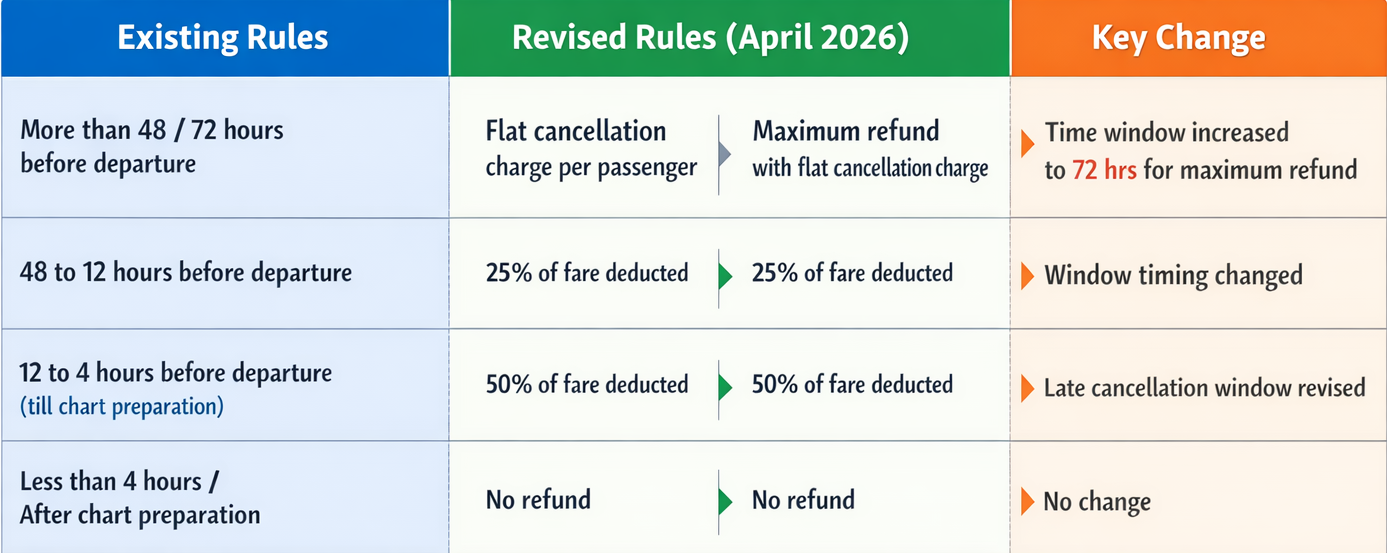
Indian Railways has announced a new set of rules for ticket cancellations, Tatkal bookings, and a few other travel-related things. These changes will roll out between April 1 and April 15, 2026. If you travel by train regularly, it's worth knowing what's changing before it catches you off guard.
Cancelling Your Ticket Will Cost You More Now
This is the biggest change, and it affects everyone. The new rules are simple - the later you cancel, the less money you get back. If you cancel your ticket more than 72 hours before the train leaves, you'll get most of your money back. Only a small flat fee is deducted. Cancel between 24 and 72 hours before departure, and 25% of your fare is gone. Cancel between 8 and 24 hours before, and you lose half your ticket amount. Cancel within 8 hours of departure? You get nothing. Not a single rupee back. One thing to note here: the earlier window for maximum refund has been stretched from 48 hours to 72 hours, which is actually good news if you plan ahead. More people can now cancel early and still get a decent refund.
No More Running to the Station to Cancel
Earlier, if you had a counter ticket, you had to go to the same station you were supposed to depart from to cancel it. That rule is gone. Now you can walk into any railway station counter and cancel your ticket - much more convenient. For people who book tickets online (e-tickets), the process is even easier. Earlier, you had to file a Ticket Deposit Receipt (TDR) and wait. Now, that entire step has been removed. The refund happens automatically, without you doing anything extra.
Tatkal Tickets Are Getting Harder to Misuse
Tatkal tickets have long been a headache for genuine travellers, thanks to agents and bots grabbing them the moment the booking window opens. Railways is now pushing back hard on this. Aadhaar-based OTP is now required when booking Tatkal tickets. This was introduced from July 2025. The idea is simple - only real people with a verified identity can book these tickets. On top of that, agents are blocked from booking Tatkal tickets during the first 30 minutes of the booking window. That means from 10:00 AM to 10:30 AM for AC coaches, and 11:00 AM to 11:30 AM for non-AC coaches, agents simply cannot make a booking. Railways also says over 3 crore suspicious user IDs have been deactivated. Anti-bot systems have been strengthened to stop automated mass-booking. The Train Chart Is Now Prepared Earlier
Earlier, the reservation chart was prepared about 4 hours before departure. Now it will be done anywhere between 9 and 18 hours before the train leaves. Why does this matter? If your ticket is on a waiting list, you'll know much earlier whether it got confirmed or not. That gives you more time to arrange alternative transport or accommodation, rather than finding out at the last minute.
You Can Now Upgrade Your Class Closer to Departure
If you want to upgrade from a lower class to a higher one, you can now do it up to 30 minutes before the train departs - even if the chart has already been prepared. Earlier, you had to do this before charting, which sometimes wasn't practical.
Changing Your Boarding Point Just Got Easier
This one is especially helpful in big cities like Delhi or Mumbai, where there are multiple railway stations. If your plans change last minute and you want to board from a different station on the same route, you can now change your boarding point up to 30 minutes before departure. Earlier, this had to be done before the chart was prepared, which could be many hours in advance. Now you have more flexibility to decide closer to the actual journey time.
The Simple Takeaway
If you're a regular train traveller, the main thing to remember is this: cancel early, or it gets expensive. The new rules reward people who plan ahead and penalise last-minute cancellations heavily.
On the brighter side, Railways has genuinely made things more passenger-friendly in other areas - easier cancellations, automatic refunds for e-tickets, flexible boarding point changes, and earlier chart preparation. It's a mix of stricter rules and better convenience, and most genuine travellers should come out fine.